Baffles and tees
Broken baffle walls and damaged inlet or outlet tees, replaced so solids stay in the tank where they belong.
Repairs and leach fields
When a septic system acts up, the fix should match what actually broke. We find the failed part, repair or replace it, and leave the working parts alone.
Slow drains, gurgling, odors or wet ground over the drainage area can come from a full tank, a broken baffle, a crushed line or a field that has stopped taking water. Those have very different fixes and very different prices.
We usually start by pumping the tank, which lets us see the baffles, walls and inlet and outlet tees. If the trouble is in the lines, a camera inspection shows where and how deep it is before anyone picks up a shovel.
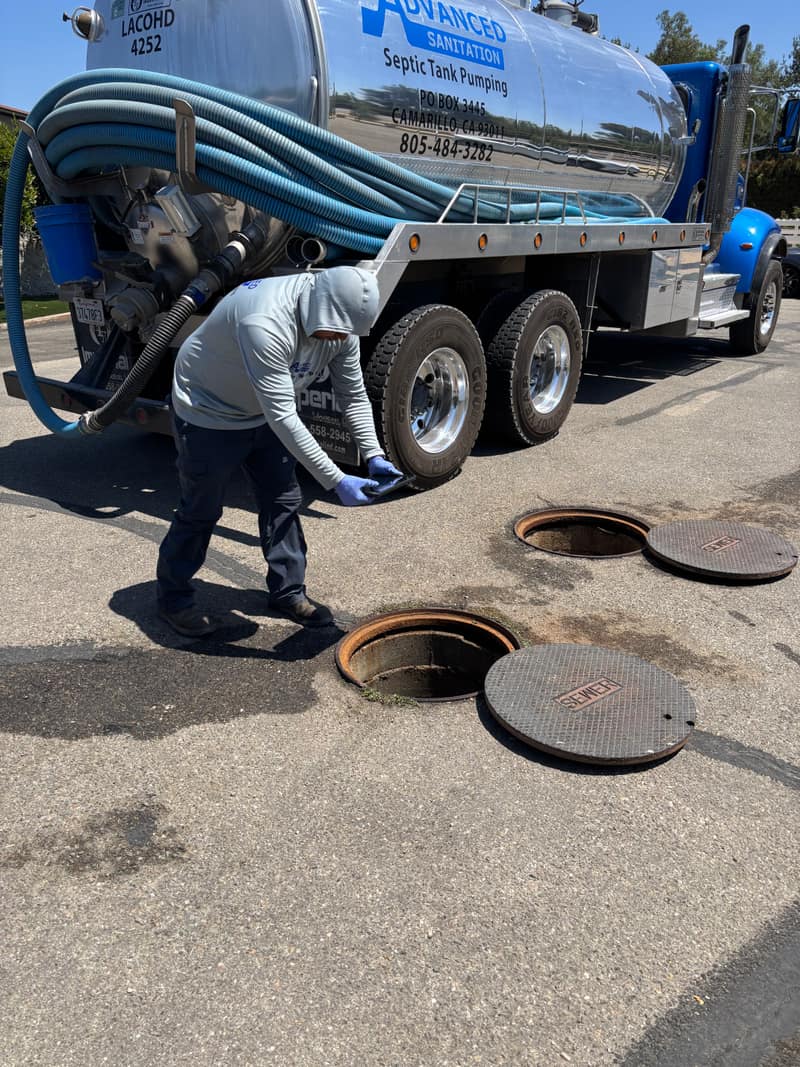
Broken baffle walls and damaged inlet or outlet tees, replaced so solids stay in the tank where they belong.
Cracked, sagging or root-filled lines and distribution boxes that no longer split the flow evenly.
Cracked or missing lids replaced, and risers added so the tank is easy to reach.
When a tank cannot be saved, a new one, often without touching a seepage pit or field that still works.
Clogged leach lines located and cleared of built-up scum and waste where the soil still drains.
Leach fields installed to the engineer's design when the old one is finished or a new system needs one.
A leach field is a set of perforated pipes laid in gravel trenches. Liquid leaves the tank, spreads through the pipes and soaks into the soil. Leach fields generally need a good-sized area of flat ground; hillside and tight lots in our area often use seepage pits instead.
A field fails when solids reach it and clog the gravel, when the soil around it is saturated, or when roots or weight crush the lines. Keep cars, heavy equipment and trees off the field, and pump the tank on schedule so solids never get that far.
When a field has to be replaced, the soil testing and field layout come from a registered geological engineer. Our crew builds it to that plan with Schedule 40 PVC and protects the rest of your yard while we work.
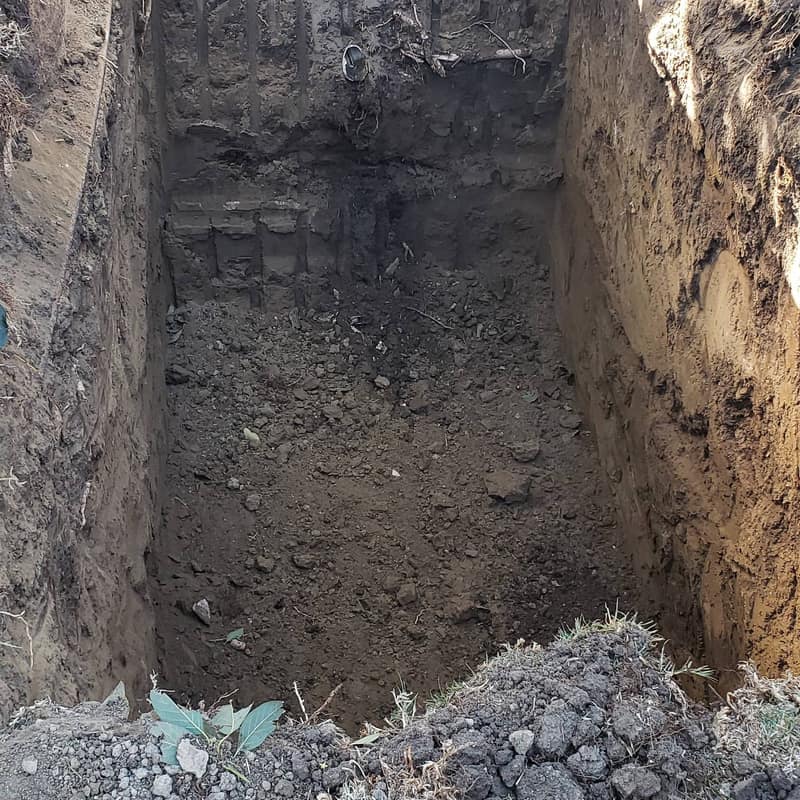
Not always. A worn-out tank can often be swapped while a working seepage pit or leach field stays in service. We check every part of the system before we recommend anything.
The baffle wall and the outlet tee keep solids in the tank and out of the leach field. The baffle wall is often the first part of a tank to break, and once solids reach the field they clog it. Replacing a broken baffle or tee is far cheaper than replacing a field.
Yes. Leach lines are usually deep enough to survive, but after a heavy impact from a tree or equipment it is worth running a camera through them to be sure nothing cracked or shifted.
Sometimes. We locate the lines, clear the built-up scum and waste where we can, and tell you plainly if the soil is too saturated for cleaning to help. In that case replacement is the only lasting fix.
Something not draining right?
Call the office and describe what you are seeing, and you will know the plan and the cost before anyone digs.