Seepage pits
Seepage Pit Service in Ventura County
Hillsides and tight lots across Ventura County often drain to seepage pits. We clean and treat the ones that are struggling and drill new ones where they are needed.
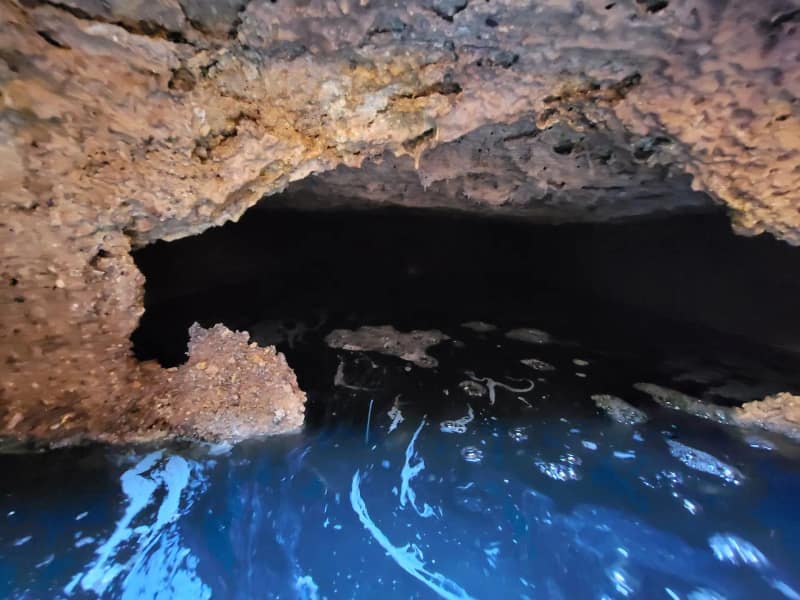
When a seepage pit slows down
Over time, scum and fine waste particles build up in a pit's perforated pipe and in the rock around it; in a cesspool they settle on the bottom. Water drains more and more slowly until the tank backs up.
We locate the pit, get to the perforated pipe, pump out as much sludge as possible and clean it thoroughly. Then we treat it to break down the remaining waste and help water get back through the holes, into the pipe and between the rock.
If the soil around the pit is oversaturated, no amount of cleaning will fix it, and we will tell you so. At that point a new pit is the answer.
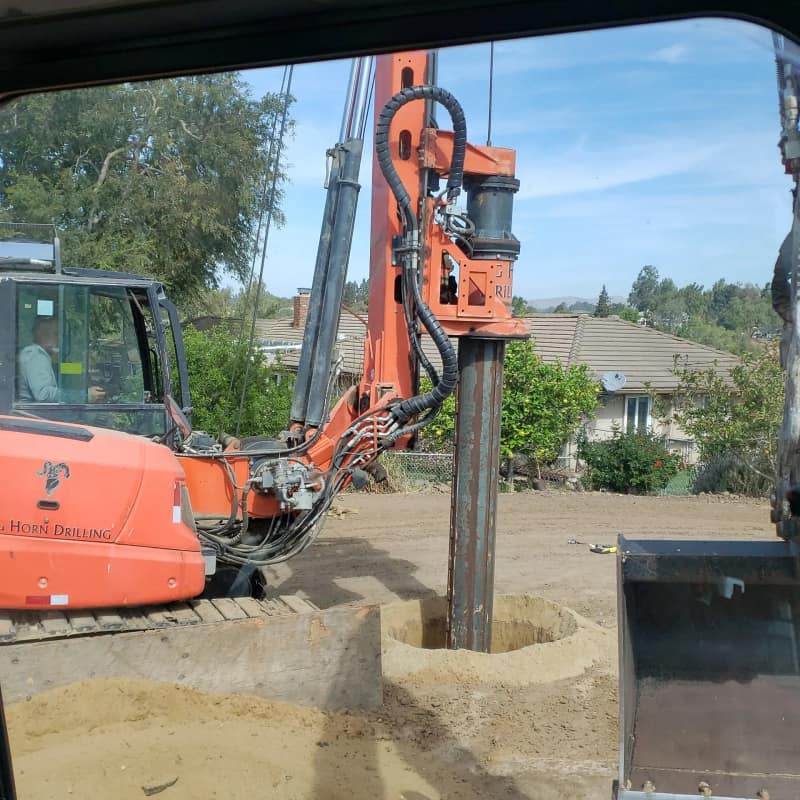
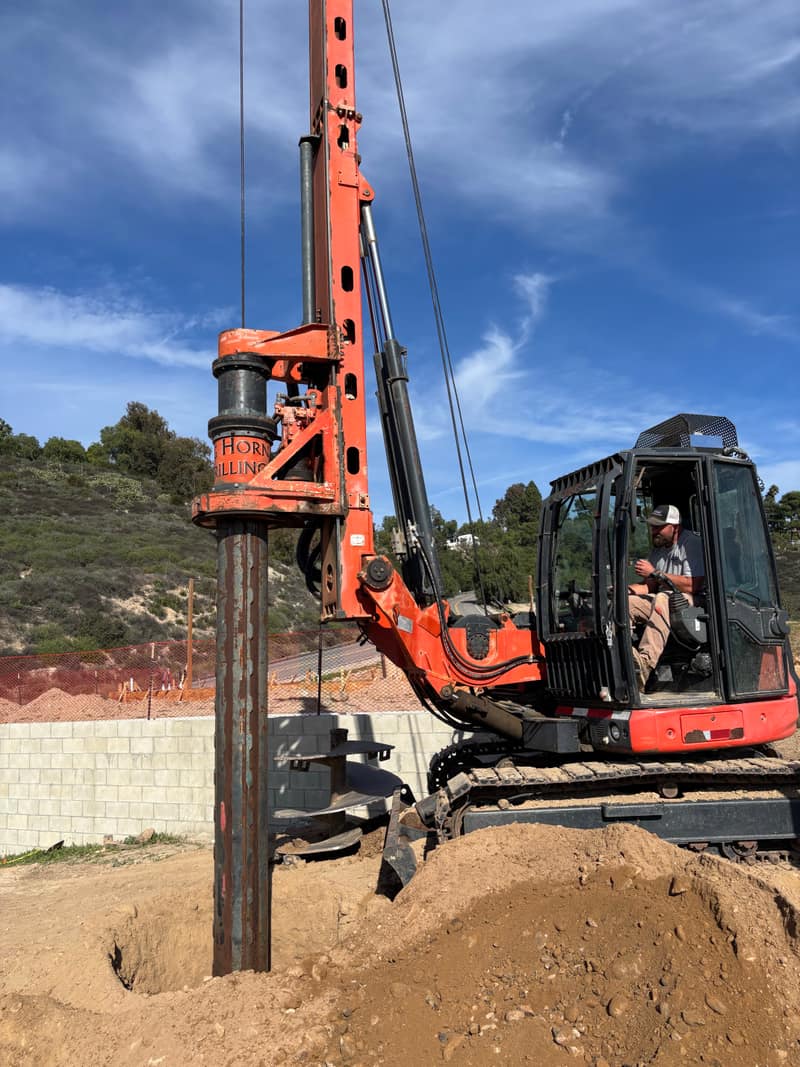
Drilling a new seepage pit
A new pit goes where the engineer's design puts it, and the site decides which rig we bring:
- A low drill for yards with overhead power lines
- A tracked excavator for drilling on hillsides
- A truck-mounted drill for open front yards
The same property protection we use on every installation applies here: mats and plates where equipment crosses the lawn, a planned route in and out, and careful backfill and cleanup.
Keep what still works
A failing tank and a failing pit are two different problems. When a tank has cracked or collapsed but the seepage pit still drains, we replace the tank and leave the pit in place, which saves you the cost of drilling. When the pit is the problem and the tank is sound, the tank stays.
Pumping the tank every two to three years is the best protection a seepage pit has, because it keeps solids from ever reaching it. Schedule pumping or read about leach fields and repairs.
Seepage pit questions
What is the difference between a seepage pit and a leach field?
Both release the liquid that leaves your septic tank into the ground. A leach field spreads it sideways through pipes in shallow trenches and needs a fair amount of flat land. A seepage pit sends it down into a deep, lined hole, which suits steep or tight lots.
Can a slow seepage pit be saved?
Often, yes. We pump out as much sludge as we can, clean the perforated pipe and treat the pit to break down what is left and get water moving through the rock again. If the surrounding soil is oversaturated, a new pit is the only lasting fix.
My tank needs replacing. Does the seepage pit have to go too?
Not if it is still working. We check the pit, and if it drains properly we replace just the tank.
Who decides where a new seepage pit goes?
The engineer on your project decides placement and depth after testing the soil. We drill and build the pit to those specifications.
Slow drains on a hillside lot?
Have your seepage pit looked at
Call the office for pit cleaning and treatment, or choose extension 2 for an estimate on a new pit.